

RFID readers have emerged as crucial components in the realm of robotics, serving as valuable robot peripherals. As a supplier of robot peripherals, I have witnessed firsthand the transformative impact of RFID readers on robotic systems. In this blog post, I will delve into how RFID readers function as robot peripherals, exploring their working principles, applications, and benefits.
Working Principles of RFID Readers in Robotic Systems
At the core of RFID technology lies the interaction between RFID tags and readers. RFID tags are small devices that can store and transmit data wirelessly. They come in two main types: passive and active. Passive RFID tags do not have an internal power source and rely on the electromagnetic field generated by the RFID reader to power themselves and transmit data. Active RFID tags, on the other hand, have their own power source, allowing them to transmit data over longer distances and with greater frequency.
RFID readers, also known as interrogators, are responsible for generating the electromagnetic field and communicating with the RFID tags. When an RFID tag enters the electromagnetic field of the reader, it becomes energized and begins to transmit its stored data. The reader then captures this data and processes it, making it available for further analysis or use by the robotic system.

In a robotic context, RFID readers are typically integrated into the robot's control system. They can be mounted on the robot's end - effector, such as a gripper or a welding torch, or placed at strategic locations in the robot's workspace. This allows the robot to interact with RFID - tagged objects in its environment, providing it with real - time information about the objects' identity, location, and status.
Applications of RFID Readers as Robot Peripherals
1. Material Handling and Logistics
In material handling applications, RFID readers enable robots to identify and track items on a conveyor belt or in a warehouse. For example, a robotic arm equipped with an RFID reader can pick up RFID - tagged products from a storage location and place them in the correct shipping container. The reader can verify the product's identity and ensure that it is being sent to the right destination. This improves the accuracy and efficiency of the material handling process, reducing errors and increasing throughput.
2. Assembly and Manufacturing
In manufacturing settings, RFID readers play a vital role in assembly operations. Robots can use RFID readers to identify the components they need to pick up and assemble. For instance, in an automotive assembly line, a robot can use an RFID reader to locate the correct engine part from a bin of similar parts. This ensures that the right part is used in the assembly process, improving the quality and reliability of the final product. Robot Welding Torch equipped with RFID readers can also be used to track the welding history of each joint, providing valuable data for quality control purposes.
3. Quality Control
RFID readers can be used in quality control processes to monitor the status of products as they move through the manufacturing process. A robot can use an RFID reader to check if a product has passed all the necessary quality inspections at each stage of production. If a product fails an inspection, the robot can divert it to a rework or scrap area, preventing defective products from reaching the market.
4. Welding Applications
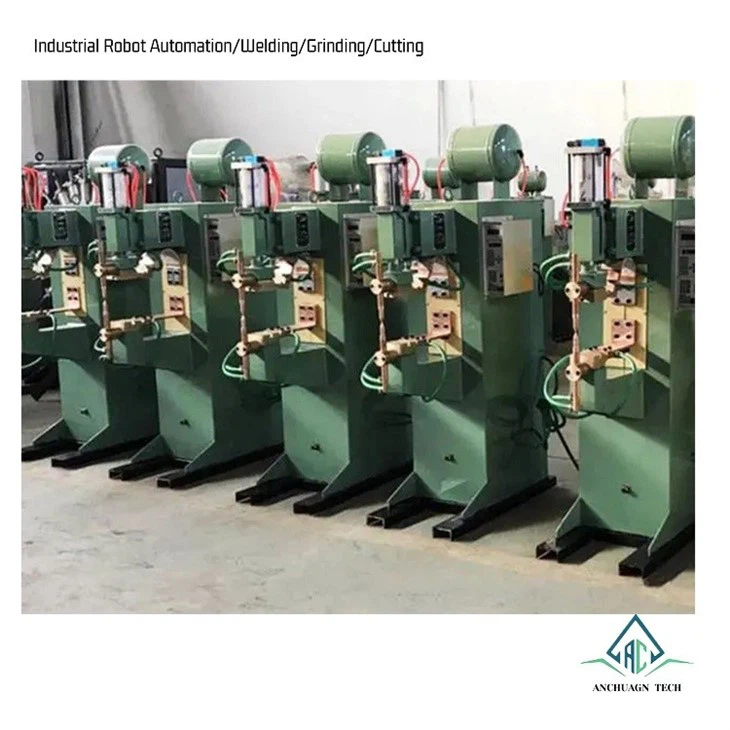
In welding operations, RFID readers can enhance the efficiency and quality of the process. Welding Torch Cleaner with RFID technology can be used to track the usage and maintenance history of the welding torch. This allows the robot to perform timely cleaning and maintenance, ensuring optimal performance of the welding torch and reducing the risk of welding defects. Additionally, RFID - enabled Pneumatic Spot Welding Machine can record the welding parameters for each spot weld, providing traceability and quality assurance.
Benefits of Using RFID Readers as Robot Peripherals
1. Improved Efficiency
By providing robots with real - time information about objects in their environment, RFID readers enable robots to perform tasks more quickly and accurately. This reduces the time spent on searching for and identifying objects, leading to increased productivity in manufacturing and logistics operations.
2. Enhanced Accuracy
RFID technology eliminates the need for manual data entry and reduces the risk of human error. Robots can rely on the accurate data provided by RFID readers to make decisions, ensuring that the right actions are taken at the right time. This improves the quality of the products and services produced by the robotic system.
3. Increased Flexibility
RFID readers allow robots to adapt to changes in their environment more easily. Since RFID tags can be attached to a wide variety of objects, robots can handle different types of products without the need for extensive reprogramming. This makes robotic systems more flexible and capable of handling a diverse range of tasks.
4. Better Traceability
In industries where traceability is crucial, such as food and pharmaceuticals, RFID readers provide a reliable way to track products throughout the supply chain. Robots can record the movement and status of RFID - tagged products, allowing manufacturers and distributors to easily trace the origin and history of each product. This is essential for quality control, recalls, and compliance with regulatory requirements.
Integration Challenges and Solutions
While RFID readers offer significant benefits as robot peripherals, their integration into robotic systems can present some challenges. One of the main challenges is interference. The electromagnetic fields generated by RFID readers can interfere with other electronic components in the robotic system, such as sensors and actuators. To overcome this challenge, proper shielding and filtering techniques can be employed. Additionally, careful placement of the RFID readers and other components can minimize the risk of interference.
Another challenge is the read range and accuracy of the RFID readers. In some applications, the RFID tags may be located at a distance from the reader or may be obscured by other objects. To address this, high - performance RFID readers with extended read ranges and advanced antenna designs can be used. Multiple readers can also be deployed in the workspace to ensure reliable tag detection.
Conclusion
RFID readers are powerful robot peripherals that offer numerous benefits in terms of efficiency, accuracy, flexibility, and traceability. As a supplier of robot peripherals, I understand the importance of providing high - quality RFID readers that are seamlessly integrated into robotic systems. Whether you are in the material handling, manufacturing, or logistics industry, RFID - enabled robots can help you streamline your operations and stay competitive in the market.
If you are interested in exploring how RFID readers can enhance your robotic systems, I encourage you to reach out to us for a consultation. Our team of experts can work with you to understand your specific requirements and provide tailored solutions that meet your needs. Let's work together to take your robotic applications to the next level.
References
- "RFID Handbook: Fundamentals and Applications in Contactless Smart Cards, Radio Frequency Identification and Near - Field Communication" by Klaus Finkenzeller.
- "Robotics: Modelling, Planning and Control" by Bruno Siciliano, Lorenzo Sciavicco, Luigi Villani, and Giuseppe Oriolo.
- Industry reports on the use of RFID technology in robotics from leading research firms.
