



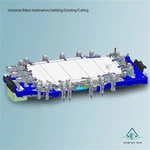
Robot Welding Equipment
Why Choose Us
Product Application
Our products are mainly used for the welding, grinding, and cutting needs of various fields, including automobiles and auto parts, aerospace, ships, petrochemicals, pipelines and pressure vessels, engineering machinery, mining equipment, two and three-wheel vehicle manufacturing, sheet metal, sports equipment manufacturing, medical device manufacturing, metal furniture manufacturing, and rail transit.
Our Company
Changzhou Anchuang Intelligent Equipment Co., Ltd. is an intelligent equipment industry and trade integration company focusing on the application of industrial robot automated welding, grinding, and cutting technologies. The company provides customers with the most professional R&D, production, sales, training, and after-sales services. The headquarters is located in Changzhou, Jiangsu, China. The company’s mission is to provide efficient, accurate, and reliable robotic solutions for the manufacturing industry, and truly realize the automated and intelligent upgrade of manufacturing for global customers.
Our Services
We provide professional consulting services: Anchuang offers customers information consultation on products, prices, technologies, and industry solutions through the Internet, telephone, email, and door-to-door services.
Our Certificates
Our certifications include high-tech enterprise certificates, high-tech product certification certificates, quality management system certification certificates, corporate credit evaluation certificates, industry-university-research-school-enterprise cooperation certificates, patent certificates, and more.
What is Robot Welding Equipment?
Robotic welding is a manufacturing process that uses mechanized programmable tools — which are also considered robots — for a completely automated welding process in which both the welding and the handling of the part are conducted by the robot. Typically, loading the ingot into the furnace is the only human involvement in the process.


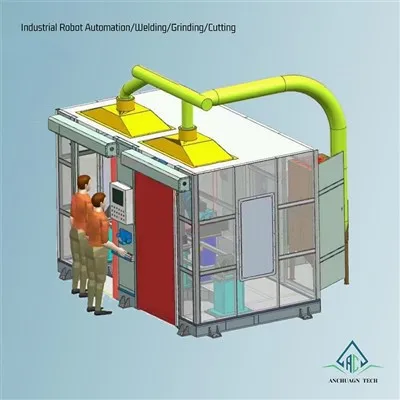


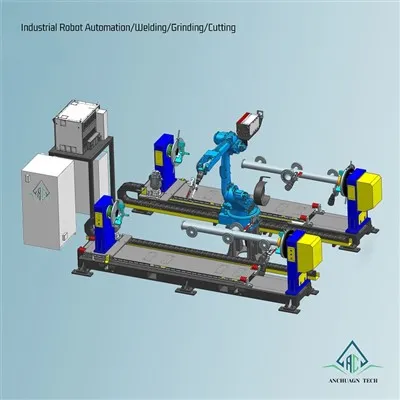
Advantages of Robot Welding Equipment
Speed
Robot welding saves a lot of valuable time, because the work is automated and much faster. Therefore, the robotic welding system ensures a significant increase in production.
Conservation of Raw Materials
Laborers in manual welding often make mistakes that result in wastage of material and power. When using robotic welding, you regulate everything including the power, allowing you to conserve energy. Robotic systems run consistently over a long time, reducing the frequency of equipment start-ups, which also saves power.
Repeatability
Manual welding requires a high level of competence from welders and also a lot of concentration in order to provide consistency and repeatability. The robot welder has no problems with this because it can continuously perform the same welding cycle – 24 hours a day, seven days a week.
Flexibility
The robotic welding machine is extremely flexible due to its many installation options. It can be placed on the floor, ceiling or linear unit. Due to its great flexibility, room requirements are lower.
Efficiency and Quality
Robotic welding systems help you speed up your output. They also perform tasks with high accuracy, eliminating the need to repeat tasks, which wastes time. Unlike manual welding, which relies on human laborers, robotic systems do not stop for breaks, vacations or sick days. Once you master the settings and programming needed for each weld, you can run the systems around the clock, allowing you to increase productivity and meet client deadlines with ease. Robotic systems also perform precisely with minimal splattering reducing the time spent cleaning up after a job. Overall, they improve customer satisfaction as you can deliver on tasks faster, improving your reputation, and gradually, your bottom line.
Consistency
One of the factors that affect consistency in manual welding is distortion of weld by heat. Robotic welders offer precision during welding. This minimizes the number of weld passes needed to complete a task, which reduces heating from the surrounding metal that can distort the final product.
Safety
The welding robot enables us to be safe from harmful effects when working. At the same time, it allows us to reduce the number of workers’ accidents in the metal products industry.
Friction Stir Welding (FSW) Robots
These robots employ frictional heat and pressure to join materials without melting them. They are crucial in industries like aerospace and shipbuilding.
Plasma Arc Welding (PAW) Robots
PAW robots use a high-velocity jet of ionized gas for welding, delivering exceptional precision in applications where narrow, deep welds are needed.
Ultrasonic Welding Robots
These robots use ultrasonic vibrations to create welds in plastics and non-ferrous metals, often seen in the electronics and medical device sectors.
Torch Brazing Robots
For joining materials using a filler metal that melts at a higher temperature than the base metals, torch brazing robots are employed, commonly in the HVAC and automotive industries.
Types of Robot Welding Equipment
Arc Welding Robots: These workhorses of welding automation use electricity to generate the heat needed for welding. They excel in applications like MIG, TIG, and Stick welding.
Spot Welding Robots: Designed for quick, precise spot welds, these robots are commonly found in the automotive industry, where they join sheet metal components.
Laser Welding Robots: Utilizing highly focused laser beams, these robots produce clean, high-precision welds. They find applications in aerospace, medical devices, and electronics.
How to Program Robot Welding Equipment More Easily
Choosing the Right Robot and Software
Before you start programming, it’s essential to select the appropriate robot and programming software for your welding application. Ensure that the robot you choose meets the specific requirements of your welding project.
Offline Programming (OLP)
Consider using Offline Programming (OLP) for complex modern welding projects. OLP allows you to program and simulate your robot’s movements and welding tasks in a virtual environment, reducing the risk of errors during actual welding operations.
Welding Cobots
In addition to OLP, welding cobots (collaborative robots) can simplify welding for end-users. These robots can work alongside human operators, offering increased flexibility and ease of use.
Feedback and Synergic Functions
Modern welding sources provide valuable feedback on the welding process. They incorporate “synergic” functions that ensure stable weld quality. This feedback mechanism helps maintain consistent and high-quality welds, reducing the need for constant adjustments.
Precise Calibration
Achieving the highest accuracy in weld position is crucial. Precise calibration of the welding cell and the use of machine vision systems can help ensure that your robot welds with exceptional accuracy.
Application of Robot Welding Equipment
Automotive Parts
Robots with welding torches can precisely weld vehicle body panels such as doors, fenders, roofs, hoods, and trunk lids. They also ensure strong and durable chassis construction, particularly in manufacturing frame rails, cross members, suspension mounts, and engine cradles. Additionally, the automation feature enhances efficiency and reduces the risk of human errors in fuel tank production.
Aircraft Components
Robotic welding ensures strong structures that meet stringent aerospace standards. It is employed to assemble wing parts including skins, spars, ribs, and stringers and landing gear components like struts, braces, and attachment points. In addition, this technique enables precise alignment by accurately welding the aircrafts frame components.
Construction Projects
The consistent welds achieved through robotic automation contribute to the structural integrity of bridges, buildings, and other large-scale structures. It also provides high repeatability and productivity, allowing for the efficient production of large steel components for many construction projects. Other examples of robotic-welded parts include girders, trusses, and support beams.
Shipbuilding Parts
The major application of this technique in shipbuilding is constructing ship hulls. Automated welding torches can accurately join steel plates and structural components, resulting in strong and watertight vessels. Another critical application is the welding of pipe systems. With precise control and maneuverability, robots adeptly handle fusing the pipes in the fuel lines and cooling systems.
Energy Infrastructure
Robotic technology is instrumental in the production of power plant components. These include boilers, turbines, and heat exchangers, where precise and consistent welds are crucial for optimal performance and efficiency. It also applies to manufacturing wind turbine towers, solar panel frames, and other infrastructures that facilitate efficient and high-quality assembly.
Consumer Goods
One prominent application of robotic welding in the consumer goods industry is in the production of electronic devices. Robots are used to assemble metal components, such as computer chassis, smartphones, and tablets.They also allow manufacturers to optimize production efficiency and maintain stringent quality standards in making consumer goods for recreational and sports activities.
Resistance Welding
Resistance welding is one of the most common types of robotic welding because of its economical benefits and versatility of function. In this process, a current passes between two pieces of metal, forming a pool with the heat and joining the pieces together.
Arc Welding
Arc welding uses an electrode to create the heat necessary to melt and weld the metal components together. This type of welding is used for applications that require high accuracy and repeatability.
TIG Welding
Tungsten inert gas (TIG) welding is used for projects that require precision, such as welding bicycle frames and completing other complex products. This is a type of arc welding process that uses a non-consumable tungsten electrode to produce the weld. Typically, this is a slower weld because of the complexity of the process.
MIG Welding
Metal inert gas (MIG) welding uses a high rate of melted filler metal to create the weld. The process involves a wire that is fed toward the heated weld tip. MIG welding is a subtype of gas metal arc welding and is best used for applications that require simplicity and speed.
Laser Welding
Laser welding uses a laser generator that delivers a laser light via a fiber optic cable through a robotic cutting head to weld pieces together. Laser welding is often used in high volume applications that require high accuracy, especially in the automotive sector.
1. Higher welding efficiency
Welding robot will not be tired, need no rest, and can carry out 24 hours of high-intensity repetitive work, so their efficiency is higher and working hours is shorter as compared to manual welding.
2. Higher Welding Accuracy
Manual welding is affected by many factors such as the welding site environment and the welder's physical condition, so the welding accuracy cannot be guaranteed. However, robot welding can work without interference when the machine quality is good, and the accuracy and consistency of welding quality are ensured.
3. Higher Welding Security
Welding is a dangerous process with a high injury rate. Welding robots use a variety of tools other than manual equipment to weld, which greatly reduces the risk of injury during welding, so using robots instead of humans can improve welding safety.


4. Lower Welding Cost
With the evolution of robot technology, it seems reasonable to use robots rather than humans in production, in terms of cost. This is mainly due to the higher production efficiency and accuracy of robot welding, reducing the cost of working hours and rework costs. On the other hand, the use of welding robots can save welder training costs.
5. Less Resource Waste
Robot welding has higher accuracy and welding performance is high, thus the finished welds need less rework, greatly reducing the waste of resources.
6. Replace Part Welding Work
Industrial robots integrated with electric welding machines can replace human welders for welding work, but robots are essentially machines operated by intelligent systems, requiring professional operators to program the controllers, set new procedures for the equipment, change process parameters, and move the robotic arms as needed. As a result, robotic welding will replace some but not all welding jobs.
Why Preventive Maintenance Matters
Preventive maintenance is essential for running your robotic welding equipment smoothly and efficiently. By performing regular maintenance tasks, you can identify and address potential issues before they become major problems. This helps to minimize downtime, reduce repair costs, and extend the lifespan of your equipment.
Power Sources: A Critical Component
The power source provides the electrical energy needed to create the arc that melts the metal and forms the weld. Without a properly functioning power source, your robotic welding equipment cannot perform its job effectively.
Key Maintenance Tasks for Power Sources
It is important to perform regular maintenance tasks to ensure the reliability and performance of your power source.
1. Inspect and Clean the Power Source. Regularly inspect the power source for any signs of damage or wear. Clean the exterior to remove dust, dirt, and debris affecting its performance.
2. Check the Connections. Inspect the electrical connections to ensure they are tight and secure. Loose connections can cause electrical arcing, damaging the power source and other components of your robotic welding equipment.
3. Monitor the Cooling System. Make sure the cooling system is functioning properly to prevent overheating and damage.
4. Replace Consumable Parts. Some parts, such as contact tips and nozzles, are consumable and must be checked and replaced regularly.
5. Perform Regular Calibration. Calibrate the power source regularly to ensure accurate and consistent welding performance. This helps to prevent issues such as poor weld quality and inconsistent welds.
Beyond the Power Source: Other Key Components
While the power source is essential to the robotic welding equipment, it is not the only component that requires preventive maintenance.
1. Robotic Arm. Responsible for positioning the welding torch and performing the weld. Regularly inspect for signs of wear or damage, and lubricate the joints as needed to ensure smooth movement.
2. Welding Torch. A tool that creates the arc and forms the weld. Inspect regularly for signs of damage or wear and replace consumable parts such as contact tips and nozzles.
3. Welding Wire. A consumable material that is melted to form the weld. Ensure the welding wire is properly spooled and fed into the welding torch to prevent issues such as wire jams and poor weld quality.
4. Welding Gas. Used to shield the weld from atmospheric contamination. Make sure the welding gas is properly stored and maintained to prevent issues such as gas leaks and poor weld quality.
the components of the welding robot
Executing part: This is the mechanical structure for the welding robot to transmit force or torque and perform specific actions in order to complete the welding task. Including the fuselage, arm, wrist, hand, etc. of the welding robot.
Control part: It is responsible for controlling the mechanical structure to complete the welding operation between the specified positions according to the specified procedures and the required trajectory, electronic, electrical components and computer systems.
Power source and transmission part: it can provide and transmit mechanical energy components and devices for the executive part, and the power source is mostly electric or hydraulic.
Process guarantee part: mainly including robot welding power supply, wire feeding, gas feeding device, etc.
Certifications

It is an intelligent equipment industry and trade integration company focusing on the application of industrial robot automated welding/grinding/cutting technologies. The company provides customers with the most professional R&D, production, sales, training and after-sales services. The headquarters is located in Changzhou, Jiangsu, China. The company's mission is to provide efficient, accurate and reliable robotic solutions for the manufacturing industry, and truly realize the automated and intelligent upgrade of manufacturing for global customers.
FAQ
Q: What are the limitations of welding robots?
Q: What is the most common problem with robotic welding applications?
Q: What are the challenges of robotic welding?
Robot programmers often have to know multiple software systems as they work with programming tools from more than one robot manufacturer. Programmers must plan where to position a welding robot's joints and arm segments to account for changes in arcs and joint angles.
Q: What are the safe precautions for robot welding machine?
Q: How efficient is robotic welding?
They also make fewer mistakes compared to their human counterparts. They can achieve up to 85% efficiency compared to 20% of their skilled human counterparts. Robots never tire, need a break, or go on vacation. They can produce the same quality welds day after day.
Q: Do welding robots have sensors?
Q: What sensors are used in robotic welding?
Q: Can robots weld better than humans?
Q: What percentage of robots are used for welding?
Q: What are the two most used welding applications for robotics?
Q: What is the difference between robotic welding and automatic welding?
Q: What type of gas is used in robotic welding?
Q: Which type of motor is not use in welding robot?
1. AC Motor. Robots rarely use alternating current (AC) motors since most of them are powered by direct current (DC) from batteries. Additionally, as DC is the preferred power source for electronic components, it is more practical to use it for actuators as well.
Q: How efficient is robotic welding?
They also make fewer mistakes compared to their human counterparts. They can achieve up to 85% efficiency compared to 20% of their skilled human counterparts. Robots never tire, need a break, or go on vacation. They can produce the same quality welds day after day.
Q: How can I improve my robotic welder?
Depending on the type of robotic welding you're doing, the wires, consumables, contact tips, guns and other peripherals will impact welding performance. Tiny variations in wire feeding, for example, can lead to poor weld quality.
Q: What are the two most used welding applications for robotics?
Q: How much is a welding robot?
Q: What are robotic welding capabilities?
Options such as Touch Sensing, Through Arc Seam Tracking and laser vision will add seam finding, seam tracking or joint measurement capabilities. Adaptive capability to adjust the weld parameters can be used to optimize weld size based on sensor feedback.
Q: What industry uses robotic welding?
Robot welding is commonly used for resistance spot welding and arc welding in high production applications, such as the automotive industry. A set of FANUC six-axis robots used for welding utilizing a through-arm torch setup with ABICOR BINZEL torches.
Q: How fast can a robotic welder weld?
A robot can weld at around 35” per minute. An experienced human welder can usually maintain 18” – 20” per minute, sometimes faster but also slower if they're near the end of a long shift. The upshot is, a robot is going to complete the welds on fabrication in less time than the human welder.