



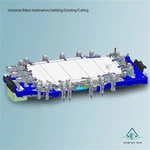
Laser Welding Equipment
Why Choose Us
Product Application
Our products are mainly used for the welding, grinding, and cutting needs of various fields, including automobiles and auto parts, aerospace, ships, petrochemicals, pipelines and pressure vessels, engineering machinery, mining equipment, two and three-wheel vehicle manufacturing, sheet metal, sports equipment manufacturing, medical device manufacturing, metal furniture manufacturing, and rail transit.
Our Company
Changzhou Anchuang Intelligent Equipment Co., Ltd. is an intelligent equipment industry and trade integration company focusing on the application of industrial robot automated welding, grinding, and cutting technologies. The company provides customers with the most professional R&D, production, sales, training, and after-sales services. The headquarters is located in Changzhou, Jiangsu, China. The company’s mission is to provide efficient, accurate, and reliable robotic solutions for the manufacturing industry, and truly realize the automated and intelligent upgrade of manufacturing for global customers.
Our Services
We provide professional consulting services: Anchuang offers customers information consultation on products, prices, technologies, and industry solutions through the Internet, telephone, email, and door-to-door services.
Our Certificates
Our certifications include high-tech enterprise certificates, high-tech product certification certificates, quality management system certification certificates, corporate credit evaluation certificates, industry-university-research-school-enterprise cooperation certificates, patent certificates, and more.
What is Laser Welding Equipment?
Laser welding is a precise process of fusing metal parts using a beam of laser light. It has found numerous applications across most industries, particularly in the automation of small-component welding, where tight control means there’s no need for cleanup.


Benefits of Laser Welding Equipment
High Precision
Laser welding is extremely precise and can be used to weld even the smallest of components with high accuracy. This is because the laser beam can be focused to a very small point, allowing for precise control over the welding process.
Minimal Heat Affected Zone (HAZ)
Laser welding produces a very small HAZ, which means that there is minimal distortion or damage to the surrounding material. This is particularly important when welding delicate or thin materials, as it minimizes the risk of warping or deformation.
High Speed
Laser welding is a very fast process, which means that it can be used to weld large volumes of components quickly and efficiently. This makes it ideal for use in high-volume manufacturing environments.
Versatility
Laser welding can be used to weld a wide range of materials, including metals, plastics, and ceramics. This makes it a versatile welding technique that can be used in a variety of different applications.
Reduced Welding Costs
Laser welding is a cost-effective welding technique, as it requires less material and produces less waste than traditional welding methods. This can help to reduce overall welding costs and improve profitability.
Improved Weld Quality
Laser welding produces high-quality welds that are strong, durable, and aesthetically pleasing. This is because the laser beam produces a narrow, deep weld that penetrates the material more effectively than other welding techniques.
What Is the Origin of Laser Welding Equipment?
Laser welding was first developed in the ‘60s, almost in parallel with the development of lasers themselves. The first experiments in laser welding were conducted by researchers at the Bell Telephone Laboratories in the US. The first laser welds were made using a ruby laser, applying short pulses of high-intensity energy in coherent beams. When pulses were focused onto a small spot at the junction of metal parts, the metals melted and flowed together. Even in these early experiments, this resulted in very narrow and precise welds, with minimal HAZ (heat-affected zones) and distortion. It even demonstrated some ability to join dissimilar materials.
How Does Laser Welding Equipment Work?
Pre-Welding Preparation
Before welding, removing surface contaminants such as dirt or grease from the workpiece is important. Having a clean part prevents process errors or flaws while increasing tooling life. One can carry out this process using degreasers, aqueous solutions, and other solvents.
Aligning and Fixturing
After cleaning the workpiece, align them properly before the welding begins. This ensures the laser energy is evenly distributed to the intended joint area.
Securely clamp the workpiece using a workholding fixture. This workholding fixture accurately positions the part and keeps vibration in check.
Welding Process
Set up and configure the laser welding machine to meet each part’s requirements.
After that, position the laser beam just above the joint using fiber optics or mirrors afterward. The material gets heated up and melts as heat is passed through.

Clean the parts to be welded and position them accurately. The contact line should be closed and gap-free to improve weld quality.
Use manual clamps or automated fixtures to hold parts in place and keep them stable during the welding process.
Adjust the beam’s focal point onto the welding area. The optical gear in the welding torch usually provides for easy adjustment of focus.
Adjust the beam power and test it on scrap material and trial parts. Before moving to the workpiece, make sure it is putting out sufficient energy to melt the material but not enough to excessively heat parts.
Apply the beam at the start of the welding area. Once an appropriate melt pool has formed, it must be traversed along the weld in a steady motion. Traditional welding techniques such as hot point rotation will encourage good fusion and improve the weld quality.
Cool the part naturally once the welding is complete. You can also quench it in water or use other cooling methods.
What Kinds of Materials Can be Welded Using Laser Welding Equipment?
Metals
Laser welding can be used to join a variety of metals, including steel, aluminum, copper, brass, titanium, and nickel. Laser welding is particularly useful for welding thin sheets of metal, as it produces a narrow, precise weld that minimizes heat distortion.
Plastics
Laser welding can be used to join thermoplastics, which are plastics that can be melted and reformed. This includes materials such as polycarbonate, acrylic, and nylon. Laser welding is particularly useful for joining small, delicate plastic parts, as it produces a clean, precise weld that minimizes damage to the surrounding material.
Ceramics
Laser welding can be used to join ceramics, including materials such as alumina, zirconia, and silicon carbide. Laser welding is particularly useful for joining ceramics that are difficult to weld using traditional methods, as it produces a precise, localized heat source that minimizes thermal stress.
Composites
Laser welding can be used to join composite materials, which are materials made up of two or more different materials. This includes materials such as carbon fiber reinforced plastic (CFRP) and glass fiber reinforced plastic (GFRP). Laser welding is particularly useful for joining composite materials that are difficult to weld using traditional methods, as it produces a precise, localized heat source that minimizes damage to the surrounding material.
Conduction Welding: This method uses the lowest power rating of any laser-based approach. It merges the melted edges by capillary action alone, with no filler. This approach is best suited to welding precisely fitted edges of thin materials.
Deep Penetration Welding: This method is suitable for welding thicker materials. It uses high laser power to heat a deep and wide portion of the material. In general, the laser is first used to cut a keyhole that penetrates through the material (ensuring full-thickness welding). The resulting hole is then closed with a molten filler rod at its trailing edge, as the laser progresses along the weld.
Laser Spot Welding
This method is best used for small, complex parts. The laser creates small, localized welds. These spot welds can make point joints between edges, or melt through one part to merge with the part below.
Laser Seam Welding
This approach makes long, continuous seams. It often uses a filler rod to create a filet at the joint using similar pool control motions to those seen in electrical and traditional thermal methods.
Hybrid Laser Welding
This method mixes laser and other welding processes such as MIG and TIG. Combining processes in this way can give you the advantages of both systems.
Applications of Laser Welding Equipment


Automotive Industry
Laser welding is used in welding small, delicate, and complex automotive parts such as connectors and circuit breakers. This process has successfully replaced traditional welding operations, including metal inert gas and resistance welding.
One of the most important contributions of laser welding is manufacturing battery packs in electric vehicles. Laser welding is essential when joining cells and setting up a full battery assembly. Other examples include plastic car components and subcomponents.
Steel Construction
This process applies to welding steels for wind turbine towers, bridges or container ships. Furthermore, welding high carbon steels using a laser beam saves cost and energy.
Tool Making
Part manufacturers use the process for welding and making tools such as inserts, cutting edges, mold, and die tooling. Furthermore, it is possible to laser weld the tools without compromising the appearance and structure. One can add material to the damaged region during periodic maintenance instead of total tool replacement. This, in turn, saves cost and time.
Medical Devices
Laser welding is the safest and the most non-intrusive way to weld medical devices. These devices must be sterile with undistorted dimensions to enhance their functionality. Laser beam welding can meet all these requirements. This welding process can create high-quality seams even in thin materials such as stents and surgical tools.
Aerospace Industry
Using a laser welding system, the aerospace industry can adhere to the strict requirement for safety. The welding method is highly precise and accurate, suitable for the high tolerance the industry is known for.
Another reason for the increased adoption of the laser welding method in the aerospace industry is the compatibility with dissimilar aerospace materials from titanium to aluminum alloys. Common aerospace parts joined by the welding method include engine parts, fuel tanks and turbine components.
Jewelry Making
Fine Detail Work: Ideal for delicate tasks like repairing or resizing jewelry, laser welding offers precision without damaging heat-sensitive materials.
Shipbuilding
Structural Welding: Used in the construction of ships, laser welding provides strong, deep welds for large steel sections.
Rail Industry
Rail Component Fabrication: For the construction of rail cars and components, laser welding offers high-strength joins essential for durability and safety.
Construction Equipment
Heavy Machinery: In the fabrication of construction equipment, laser welding is used for its strength and efficiency in joining heavy materials.
Energy Sector
Solar Panels and Wind Turbines: Laser welding is employed in the manufacturing of solar panel components and wind turbine parts, where precision and strength are key.
Consumer Products
Home Appliances: Used in the manufacturing of various household items, offering aesthetic and strong welds.
Laser welding's precision, speed, and versatility make it a valuable technique in these industries, enhancing product quality, durability, and performance.
How to choose the most satisfactory fiber Laser Welding Equipment?
To select the most suitable fiber laser welder that meets your specific needs, it is essential to take into account various factors. Here are some crucial aspects to consider:
Application
The first step in selecting a laser welder is to determine the specific application for which you need the machine. Different laser welders are designed for different types of materials and applications, so it's essential to choose a welder that is suitable for your needs.
Power
The power of a fiber laser welder determines the depth and speed of the weld. Higher power welders are suitable for thicker materials, while lower power welders are ideal for thinner materials.
Beam Quality
The quality of the laser beam affects the precision and accuracy of the weld. A laser with a high-quality beam will produce a more precise and consistent weld.
Pulse Duration
The pulse duration of the laser affects the heat input into the material. Shorter pulse durations produce less heat, resulting in less distortion and better control of the weld.
Ease of Use
A fiber laser welding machine should be easy to operate and maintain. Look for a machine that has a user-friendly interface and requires minimal maintenance.
Protective Equipment
When using laser welding equipment, you should wear appropriate protective gear to prevent any potential injuries. The following are some of the essential safety equipment that you should use:
Laser safety glasses or goggles
Protective clothing, including gloves, aprons, and sleeves
Respirators or dust masks to prevent inhalation of fumes or gases
Earplugs or earmuffs to protect against noise
Proper Ventilation
Laser welding produces fumes and gases that can be hazardous to your health. Proper ventilation is essential to maintain a safe working environment. Ensure that your workspace has adequate ventilation to remove any harmful fumes or gases.
Electrical Safety
Laser welding equipment uses high voltage and current, which can be dangerous if not handled correctly. Always follow the manufacturer's instructions and guidelines when operating the equipment. Ensure that the equipment is grounded and that all electrical connections are secure.
Fire Safety
Laser welding generates intense heat that can cause fires. Keep flammable materials away from the welding area and ensure that you have a fire extinguisher nearby in case of an emergency.
Certifications

It is an intelligent equipment industry and trade integration company focusing on the application of industrial robot automated welding/grinding/cutting technologies. The company provides customers with the most professional R&D, production, sales, training and after-sales services. The headquarters is located in Changzhou, Jiangsu, China. The company's mission is to provide efficient, accurate and reliable robotic solutions for the manufacturing industry, and truly realize the automated and intelligent upgrade of manufacturing for global customers.
FAQ
Q: What are the limitations of laser welding?
Q: What precautions should be taken during laser welding?
Never point the laser beam at anyone's eyes!
Do not look directly into a laser beam!
Always wear protection glasses!
If the laser light accidentally strikes your eyes, close your eyes and immediately move your head out of the laser beam.
Q: What are the basic requirements of laser welding?
Q: Do you need a mask for laser welding?
Q: What specific safety equipment is needed for laser use?
Q: What is the most important safety equipment when operating a laser equipment?
Laser safety glasses with specific wavelength filters must be worn to shield against potential reflections or scattered laser light. These glasses are engineered to absorb or block the laser radiation, safeguarding the eyes from accidental exposure and preventing eye injuries.
Q: How thick can a laser welder weld?
Q: What is the biggest safety issue with lasers?
Q: What are the most common hazards of laser equipment?
Q: What precautions must be taken when working with a laser?
Q: Is laser welding safer?
Q: What is laser welding machine?
Q: What equipment is needed for laser welding?
Q: What type of laser is used for welding?
Q: Can a laser welder weld steel?
Q: Is laser welding better than welding?
Q: Do laser welders use wire?
Q: How much does a laser welding machine cost?
Q: Are laser welders easy to use?
Q: How safe are laser welders?