



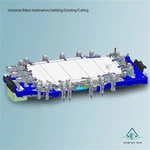
Welding Positioner
Why Choose Us
Product Application
Our products are mainly used for the welding, grinding, and cutting needs of various fields, including automobiles and auto parts, aerospace, ships, petrochemicals, pipelines and pressure vessels, engineering machinery, mining equipment, two and three-wheel vehicle manufacturing, sheet metal, sports equipment manufacturing, medical device manufacturing, metal furniture manufacturing, and rail transit.
Our Company
Changzhou Anchuang Intelligent Equipment Co., Ltd. is an intelligent equipment industry and trade integration company focusing on the application of industrial robot automated welding, grinding, and cutting technologies. The company provides customers with the most professional R&D, production, sales, training, and after-sales services. The headquarters is located in Changzhou, Jiangsu, China. The company’s mission is to provide efficient, accurate, and reliable robotic solutions for the manufacturing industry, and truly realize the automated and intelligent upgrade of manufacturing for global customers.
Our Services
We provide professional consulting services: Anchuang offers customers information consultation on products, prices, technologies, and industry solutions through the Internet, telephone, email, and door-to-door services.
Our Certificates
Our certifications include high-tech enterprise certificates, high-tech product certification certificates, quality management system certification certificates, corporate credit evaluation certificates, industry-university-research-school-enterprise cooperation certificates, patent certificates, and more.
What is Welding Positioner?
A welding positioner is a mechanical device that is used to fix and rotate a workpiece so that the welder can work at an appropriate angle and have a consistent surface. It has the ability to spin quickly, even when bearing significant weight. The main purpose of the welding positioner is to ensure that the workpiece is always in the most suitable welding position.


5 things welders need to know about Welding Positioner
Remember the COG
Selecting the right positioning device for the job involves accounting not only for the weight and size of the weldment, but also for the center of gravity (COG) and how far it is from the positioning device. COG is the point at which the weldment balances on all axes equally. As the distance increases from the device, more torque is applied to the positioner. The COG changes as the welder adds material and parts to the positioner, so these changes must be taken into account.
The table rotates by a variable-speed electric motor and can be hand- or foot-controlled. The positioner motor and control should be selected based on the size and speed that are required to perform the desired welding operation.
The positioner manufacturer’s specifications will guide the motor and control choice. It’s important for welders to check the specifications for both horizontal and vertical loading to make sure capacity is adequate to handle the weldment. The positioner should be able to withstand the largest possible load.
Attach Weldment Correctly
How a weldment is attached to a positioning device is as important as the positioner itself, because this is the point where separation would naturally occur. Production fixtures are designed for a specific application performed repeatedly. This type of fixture is mounted permanently to the positioner, and its specific shape allows for easy part alignment.
Round parts often are attached by a three-jaw chuck. The part must not pull away from the jaws when the part extends from the table. Also, the part may expand or contract from the heating and cooling that occur during and after the welding process, which can change the grip that the chuck has on the workpiece.
Fixtures and chucks add weight and distance from the faceplate, which needs to be considered when sizing the positioning device. While the weight of a weldment applies torque to the device, the distance that weight is applied multiplies the torque by the increase in distance. For example, a 50-lb. weldment that is 3 inches away from the face of the positioning table creates 12.5 ft.-lbs. of torque in the vertical position. If the distance is increased to 6 in., the torque increases to 25 ft.-lbs. at the mounting surface. The increased torque may require a larger-capacity machine.
Many positioners have slots that allow the workpiece to be bolted to the face. Welding the part to the positioner is often a good way to prevent shear forces from sliding the part as it is maneuvered. Any of these methods, whether stand-alone or combined, will work if applied properly.
Use Turning Rolls for Cylinders
If a weldment is cylindrical, it is eligible to be rolled. Small turning rolls—powered or idler type—can rotate a pipe or vessel to enable downhand welds. The power rolls provide steady rotation, producing an even circumferential weld. Idler rolls are not powered but can be added in series to support longer pipes and vessels. Often these are used for adding flanges to pipe ends and connecting pipes and ends to vessels.
The combination of a roller-type pipe stand and a vertical-faced table positioner provides stability and safety when a round part is extended outward. When the rollers provide two points of contact, the weight is distributed evenly, and the COG can be supported.
Keep It Flat
Even with small positioning equipment it is important that the unit be mounted to a flat, even surface to prevent it from tipping. If mounting holes are provided, they should be used to secure the positioner to a stable surface to prevent tipping when or if it encounters an unexpected force. A positioner mounted to a workbench or stand must be secured as well.
Connect Ground Current to the Positioner
During welding, a ground current should be connected to the positioner itself. The ground current transfers from the table and into the chassis, which eliminates having to remove and replace a welding clamp continuously. Without proper grounding, electrical parts can be damaged and substandard weld deposits made.
The positioner should be compatible with the electric current produced by the welding process. Also, all ground cables must be secured tightly by removing any paint before bolting to the carriage.
Types of Welding Positioner
Manual Welding Positioners:
Manual welding positioners are the simplest and most affordable type available. As the name suggests, they are operated manually, requiring users to adjust the positioner themselves. They are ideal for light-duty applications in small workshops where precision and efficiency are not the primary concern. These positioners typically handle load capacities up to 1,000 pounds.
Motorized Welding Positioners:
Motorized welding positioners, also known as powered positioners, are the most common type found in workshops and factories. They are equipped with a motor that rotates the workpiece, making it easier to weld at desired angles. Available in various sizes and capacities, motorized positioners are suitable for medium to heavy-duty welding applications, capable of handling loads ranging from 100 pounds to over 100,000 pounds.
Headstock Tailstock Positioners (HTPs):
Headstock Tailstock Positioners are designed to hold and rotate cylindrical workpieces. They consist of two sections: the headstock positioned at one end of the workpiece and the tailstock at the other, facilitating easy rotation. Offering more stability and support, HTPs are ideal for heavy-duty applications.
Turntables:
Turntables rotate workpieces horizontally, ideal for welding circular or ring-shaped items like pipes or tanks. They can be manual or motorized depending on the application's needs. Motorized turntables are common in industrial settings where large, heavy workpieces require rotation.
Multi-axis Positioners:
Multi-axis positioners are the most advanced type, capable of moving workpieces in multiple directions to facilitate welding from various angles. They come in configurations like 2-axis, 3-axis, and 6-axis, often computer-controlled and requiring specialized training. These positioners are ideal for high-end welding applications in industries like aerospace and automotive.
Tilt and Rotate Positioners:
Tilt and rotate positioners, also known as "tilt rotators," combine rotational and tilting movements, offering flexibility in positioning workpieces for welding angled and rotated components.
Adjustable Height Positioners:
Adjustable height positioners provide vertical adjustability alongside rotational movement, allowing users to weld comfortably at different heights. They are particularly useful for large or bulky workpieces that require varied welding positions.
Benchtop Positioners:
Benchtop positioners are compact and portable, designed to mount on workbenches or tables. Suitable for lighter-duty welding tasks like small-scale fabrication or hobbyist projects, they offer convenience and flexibility in limited workspace settings.
Pipe Welding Positioners:
Essential in welding processes, positioners hold and rotate workpieces to achieve accurate and efficient welding operations. They come in various types and models tailored to different applications.
Light-Duty & Heavy-Duty Positioners:
Within the aforementioned categories, welding positioners can further classify as light-duty or heavy-duty based on load capacities. Light-duty positioners handle smaller workpieces and low-volume applications, while heavy-duty positioners are built for larger, heavier workpieces in high-demand industrial environments.
Benefits of Using Welding Positioners
Improved Weld Quality
Positioners ensure consistent and high-quality welds by maintaining the ideal angle and orientation throughout the welding process.
Increased Productivity
Welders can work more efficiently as they do not need to manually reposition the workpiece, reducing downtime.
Enhanced Safety
Positioners reduce the need for welders to work in awkward or uncomfortable positions, decreasing the risk of fatigue and injury.
Versatility
Different types of positioners can accommodate a wide range of workpiece sizes and shapes.
Consistent Welding Parameters
Automatic positioners allow precise control over welding parameters, resulting in consistent weld bead size and penetration.
Welding positioner installation process
Site Preparation
Choose a location for the welding positioner that provides sufficient space for safe operation and easy access. Ensure that the floor is level and can support the weight of the positioner.
Unpacking and Inspection
Carefully unpack the welding positioner and inspect it for any shipping damage. Check for all the components listed in the user manual.
Positioner Placement
Place the welding positioner in the desired location. If it is a large or heavy unit, use appropriate lifting equipment to move it into place.
Leveling
Use a level to ensure that the welding positioner is perfectly level. This is critical for accurate and stable positioning during welding.
Securing the Positioner
Once leveled, secure the welding positioner to the floor using appropriate anchors or fasteners. This step is essential for stability and safety during operation.
Power Connection
Connect the welding positioner to the power source according to the manufacturer’s specifications. Ensure that the power supply meets the equipment requirements.
Points To Know When Working On Weld Positioners
Remember the COG:
Selecting the right positioning device for the job involves accounting not only for the weight and size of the weldment, but also for the center of gravity (COG) and its distance from the positioning device. The COG is the point where the weldment balances on all axes equally. As the distance from the device increases, more torque is applied to the positioner. The COG changes as the welder adds material and parts to the positioner, so these changes must be taken into account.
Attach Weldment Correctly:
How a weldment is attached to a positioning device is as important as the positioner itself because this is where separation could naturally occur. Production fixtures are designed for specific applications that are performed repeatedly. This type of fixture is permanently mounted to the positioner, and its specific shape allows for easy part alignment.
Keep It Flat:
Even with small positioning equipment, it is important that the unit be mounted on a flat, even surface to prevent tipping. If mounting holes are provided, they should be used to secure the positioner to a stable surface, preventing tipping in case of unexpected forces. A positioner mounted on a workbench or stand must also be securely fastened.
Connect Ground Current to the Positioner:
During welding, a ground current should be connected directly to the positioner itself. This current transfers from the table into the chassis, eliminating the need to continuously remove and replace a welding clamp. Improper grounding can lead to damage to electrical components and substandard weld deposits.
The principle of workpiece application: The shapes of different structural parts of construction equipment are very different. The displacement requirements during welding vary as well. Therefore, an appropriate welding positioner should be selected according to the structural characteristics of welding structural parts and welding requirements.
The principle of convenient welding: According to the manual welding operation conditions, the selected welding positioner should be able to transfer any welded workpieces to the flat welding or ship welding position to avoid vertical welding and overhead welding, to ensure welding quality.
welding positioner
lf the optional welding positioner is used for circular seam welding, the speed of rotation should be considered according to the groove of the weldment. The speed should be within the range of the speed adjustment of the positioner. to be considered. Whether the angle of inclination can meet the optimal welding position of the weldment should be taken into consideration too. When contact occurs between the inclined angle and the weldment, it needs to have a larger gap from the ground to ensure the processing requirements of the entire welding.
Welding Position
lf the size of the entire weldment of the welding positioner is relatively large, then the inclination of the worktable needs.
The principle of easy operation
You should choose a safe, reliable, open, low operating height, compact welding positioner to facilitate the operation and placement of the welding positioner. If the welding operation height of the welding structure positioner is high, workers can perform welding by means of heightening. They can also adjust the height position by installing a hydraulic lifting platform.
Certifications

It is an intelligent equipment industry and trade integration company focusing on the application of industrial robot automated welding/grinding/cutting technologies. The company provides customers with the most professional R&D, production, sales, training and after-sales services. The headquarters is located in Changzhou, Jiangsu, China. The company's mission is to provide efficient, accurate and reliable robotic solutions for the manufacturing industry, and truly realize the automated and intelligent upgrade of manufacturing for global customers.
FAQ
Q: What are the three major functions of welding positioner?
Q: Why is there a need to set up welding positioners?
Q: How does a welding positioner work?
Q: How do you ground a welding positioner?
Q: What is the purpose of positioner?
Q: What is the principle of pneumatic positioner?
Q: What are the two benefits of preheating weld?
Q: How many types of positioners are there?
Q: Which kinds of actuators use positioners?
The mounting of positioners on rotary actuators (ball valves, butterfly valves) differs from that on linear actuators (control valves, cylinder positioners), so that different mounting bridges and connecting parts are always required.
Q: What is the difference between pneumatic positioner and smart positioner?
Q: What is a positioner?
Q: What are the applications of positioners?
Q: What is the principle of smart positioner?
Q: What are the advantages of smart positioner?
Q: What is the cost of smart positioner?
Q: How do positioners improve weld quality?
Q: How much is a welding robot?
Q: Why is there a need to set up welding positioners?
Q: What are the three major functions of welding positioner?
Q: What is the difference between a welding fixture and a welding positioner?