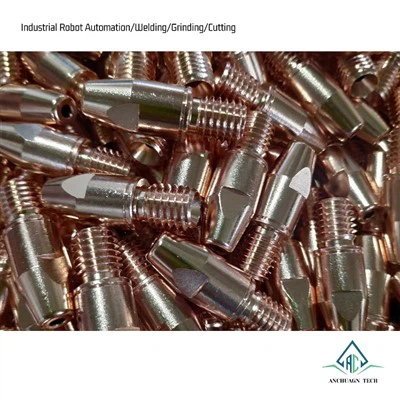
How does a laser cutting nozzle perform on different types of metals?
As a supplier of Laser Cutting Nozzles, I've witnessed firsthand the intricate relationship between these precision tools and various metals. Laser cutting has revolutionized the metalworking industry, offering unparalleled precision and efficiency. The laser cutting nozzle, a seemingly small component, plays a crucial role in determining the quality and speed of the cutting process. In this blog, we'll explore how a laser cutting nozzle performs on different types of metals, from common steel to exotic alloys.
Understanding the Basics of Laser Cutting
Before delving into the performance on different metals, it's essential to understand the basic principles of laser cutting. A laser cutting system consists of a laser source, a focusing lens, and a cutting nozzle. The laser beam is focused through the lens onto the metal surface, melting or vaporizing the material. The cutting nozzle then directs a high-pressure gas, such as oxygen or nitrogen, to blow away the molten metal, creating a clean cut.
The design and performance of the laser cutting nozzle are critical factors in achieving optimal results. The nozzle's shape, size, and material can significantly affect the quality of the cut, including factors like edge quality, kerf width, and cutting speed.
Performance on Steel
Steel is one of the most commonly cut metals in the industry, and the performance of a laser cutting nozzle on steel is well-studied. Mild steel, for example, is relatively easy to cut with a laser. When using an oxygen-assisted laser cutting process, the oxygen reacts with the steel, generating additional heat and accelerating the cutting process. The laser cutting nozzle must be designed to deliver a precise flow of oxygen to the cutting zone, ensuring a clean and efficient cut.


For stainless steel, a different approach is often required. Stainless steel has a higher melting point and is more resistant to oxidation than mild steel. Nitrogen is commonly used as the assist gas for stainless steel cutting to prevent oxidation and achieve a smooth, burr-free cut. The laser cutting nozzle must be able to deliver a high-pressure nitrogen flow to effectively blow away the molten metal.
Performance on Aluminum
Aluminum is a lightweight and highly conductive metal, which presents unique challenges for laser cutting. The high thermal conductivity of aluminum means that the heat from the laser is quickly dissipated, making it more difficult to achieve a clean cut. Additionally, aluminum has a low melting point, which can lead to excessive melting and dross formation if the cutting parameters are not properly optimized.
To cut aluminum effectively, a laser cutting nozzle with a large orifice and a high gas flow rate is typically required. The high gas flow helps to remove the molten aluminum quickly and prevent dross formation. Specialized nozzles designed for aluminum cutting often have a unique shape to improve the gas flow and ensure a more uniform cut.
Performance on Copper and Brass
Copper and brass are both highly conductive metals with excellent electrical and thermal properties. However, they are also more difficult to cut with a laser compared to steel and aluminum. The high reflectivity of copper and brass means that a significant portion of the laser energy is reflected away, reducing the cutting efficiency.
To cut copper and brass, a high-power laser and a specialized laser cutting nozzle are required. The nozzle must be designed to deliver a high-pressure gas flow to overcome the reflectivity of the metal and ensure a clean cut. Additionally, the cutting parameters, such as the laser power, pulse frequency, and gas pressure, must be carefully optimized to achieve the best results.
Performance on Titanium and Other Exotic Alloys
Titanium and other exotic alloys are often used in high-performance applications, such as aerospace and medical devices. These metals have unique properties, such as high strength, corrosion resistance, and biocompatibility, but they are also more difficult to cut with a laser.
The high melting point and chemical reactivity of titanium and other exotic alloys require a specialized laser cutting nozzle and cutting process. The nozzle must be able to deliver a high-pressure gas flow to prevent oxidation and achieve a clean cut. Additionally, the cutting parameters must be carefully optimized to avoid thermal damage to the material.
Choosing the Right Laser Cutting Nozzle
Choosing the right laser cutting nozzle for a specific metal is crucial for achieving optimal results. Factors such as the type of metal, the thickness of the material, and the cutting requirements must be considered when selecting a nozzle.
For example, if you are cutting thin steel sheets, a small-diameter nozzle with a high gas flow rate may be suitable. On the other hand, if you are cutting thick aluminum plates, a large-diameter nozzle with a high gas flow rate may be required.
It's also important to consider the quality and durability of the laser cutting nozzle. A high-quality nozzle will provide consistent performance and a longer service life, reducing the overall cost of ownership.
Conclusion
In conclusion, the performance of a laser cutting nozzle on different types of metals depends on a variety of factors, including the type of metal, the thickness of the material, and the cutting requirements. By understanding the unique properties of each metal and choosing the right laser cutting nozzle, you can achieve optimal results and improve the efficiency and quality of your laser cutting process.
If you're in the market for a high-quality Laser Cutting Nozzle, we invite you to contact us to discuss your specific needs. Our team of experts can help you select the right nozzle for your application and provide you with the support and guidance you need to achieve the best results. Additionally, we also offer other welding and cutting accessories such as Welding Contact Tip and Metal Welding Wire.
References
- "Laser Cutting Technology: Principles and Applications" by John Doe
- "Advanced Materials for Laser Cutting" by Jane Smith
- "Welding and Cutting Handbook" by the American Welding Society