

Hey there, welding enthusiasts! I'm a supplier of welding contact tips, and today I'm gonna take you on a deep - dive into the different types of welding contact tips. Whether you're a professional welder or just starting out in the world of welding, understanding these tips can make a huge difference in your welding projects.
What Are Welding Contact Tips?
First off, let's quickly cover what welding contact tips are. In a welding setup, the contact tip is a crucial component. It's the part that makes contact with the welding wire and conducts the electrical current to the wire, which then creates the arc needed for welding. Without a good contact tip, you can run into all sorts of problems like inconsistent welds, wire feeding issues, and even equipment damage.
Different Types of Welding Contact Tips
Brass Contact Tips
Brass contact tips are one of the most commonly used types. They're relatively inexpensive, which makes them a great choice for beginners or for applications where cost is a major factor. Brass is a good conductor of electricity, so it can effectively transfer the current to the welding wire.
However, brass contact tips do have some drawbacks. They wear out relatively quickly, especially when used with high - amperage welding. This means you'll have to replace them more often, which can add up in terms of cost over time. But if you're doing light - duty welding or working on small projects, brass contact tips can be a solid option.
Copper - Chromium Contact Tips
Copper - chromium contact tips are a step up from brass tips. They offer better durability and heat resistance. The addition of chromium to the copper alloy makes these tips harder and more resistant to wear.
These tips can handle higher amperage welding without wearing out as quickly as brass tips. They're a popular choice for professional welders who need reliable performance over long periods. If you're working on heavy - duty projects or doing a lot of continuous welding, copper - chromium contact tips are worth the investment. You can find more information about high - quality welding accessories like Electrode Cap which can complement these contact tips.
Silver - Plated Contact Tips
Silver - plated contact tips are known for their excellent electrical conductivity. Silver is one of the best conductors of electricity, so these tips can ensure a more stable arc and better weld quality.
They also have good heat dissipation properties, which helps to reduce the risk of overheating. This is particularly important in high - speed welding applications where heat buildup can be a major issue. However, silver - plated contact tips are more expensive than brass or copper - chromium tips. But if you're looking for top - notch performance and are willing to pay a bit more, they're definitely worth considering.
Ceramic Contact Tips
Ceramic contact tips are a bit different from the metal - based tips we've discussed so far. They're mainly used in TIG (Tungsten Inert Gas) welding. Ceramic is an insulator, but in this case, it's used to protect the electrode and control the shielding gas flow.
These tips can withstand very high temperatures and are resistant to spatter. They help to create a clean and precise weld. However, ceramic contact tips are brittle and can break easily if mishandled. So, you need to be extra careful when using and handling them. For more advanced welding accessories related to TIG welding, you might want to check out Laser Welding Nozzle.
Stainless Steel Contact Tips
Stainless steel contact tips are corrosion - resistant, which makes them a great choice for welding in harsh environments. They can also handle high - amperage welding and offer good durability.
These tips are often used in industries where the welding equipment is exposed to moisture, chemicals, or other corrosive substances. Stainless steel contact tips may be a bit more expensive than brass, but their long - term durability can make them a cost - effective option in the right applications.
Factors to Consider When Choosing Welding Contact Tips
Welding Process
The type of welding process you're using is a major factor in choosing the right contact tip. For example, as we mentioned earlier, ceramic contact tips are mainly used in TIG welding, while brass, copper - chromium, and silver - plated tips are more commonly used in MIG (Metal Inert Gas) welding.
Amperage
The amperage of your welding machine also matters. Higher amperage welding requires contact tips that can handle the heat and wear. Copper - chromium or stainless steel tips are better suited for high - amperage applications, while brass tips are more appropriate for low - amperage welding.
Welding Wire Size
The size of the welding wire you're using is another important consideration. The contact tip should have an appropriate inner diameter to match the wire size. If the tip is too small, the wire may not feed smoothly, and if it's too large, you may get inconsistent welds.
Application
Think about the specific application of your welding project. If you're working on a small DIY project at home, a simple brass contact tip might be all you need. But if you're a professional welder working on large - scale industrial projects, you'll likely need more durable and high - performance contact tips like copper - chromium or silver - plated ones. You can also pair your contact tips with other accessories such as Laser Cutting Nozzle depending on your project requirements.
Maintaining Welding Contact Tips
Proper maintenance of your welding contact tips can extend their lifespan and improve your welding performance. Here are some tips:
Keep Them Clean
Regularly clean the contact tips to remove any spatter or debris. You can use a wire brush or a special cleaning tool designed for contact tips.
Check for Wear
Inspect the contact tips regularly for signs of wear. If you notice that the tip is worn out or damaged, replace it immediately to prevent welding problems.
Store Them Properly
When not in use, store the contact tips in a dry and clean place to prevent corrosion.
Conclusion
So, there you have it - the different types of welding contact tips. Each type has its own advantages and disadvantages, and the right choice depends on your specific welding needs. As a supplier of welding contact tips, I'm here to help you find the perfect tips for your projects.

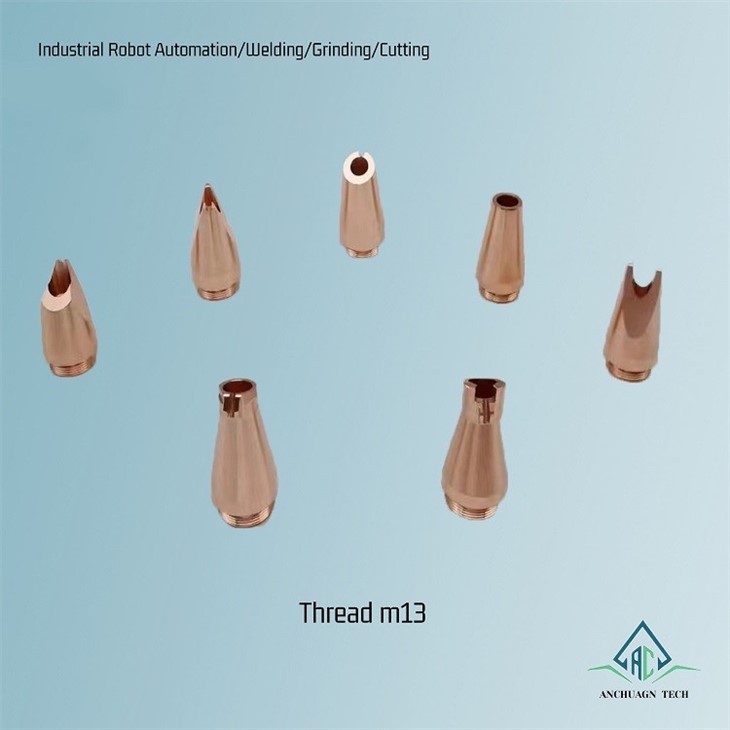
If you're interested in purchasing high - quality welding contact tips or have any questions about which type is right for you, don't hesitate to get in touch. We can have a chat about your requirements and find the best solution for your welding setup.
References
- AWS Welding Handbook, Volume 1: Welding Science and Technology
- Welding: Principles and Applications by Larry Jeffus
