

When it comes to selecting a Dual Axis Positioner, there are several factors you need to take into account. As a supplier of Dual Axis Positioners, I've had the chance to work with a wide range of customers, and I've seen firsthand how important it is to make the right choice. So, let's dive into what you should consider.
Load Capacity
The first thing you gotta think about is the load capacity. This is how much weight the positioner can handle. You don't want to pick a positioner that's too weak for your workpieces. If you try to put a heavy load on a positioner with low capacity, it won't work well and might even get damaged. On the other hand, getting a positioner with way more capacity than you need is just a waste of money.

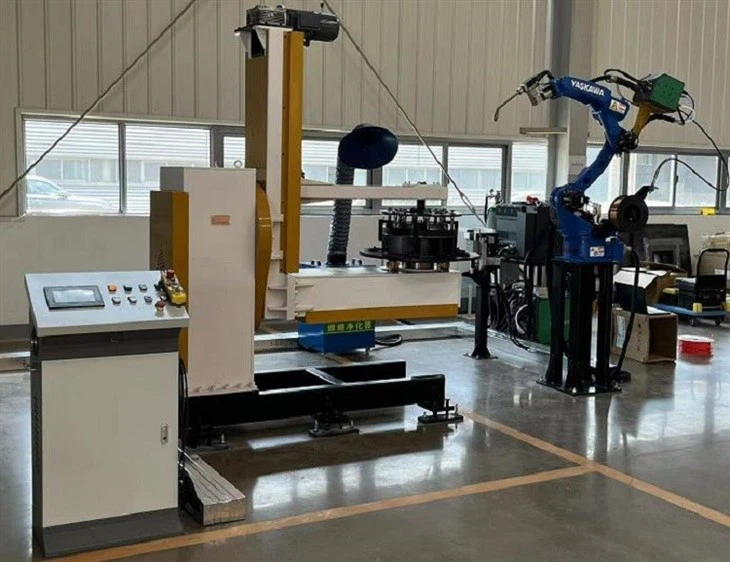
So, figure out the maximum weight of the workpieces you'll be using. Consider not just the weight of the main part but also any additional fixtures or tools that'll be on the positioner. For example, if you're working on large metal structures in welding, you'll need a high - load - capacity positioner. Make sure to leave a little buffer, say 10 - 20% more capacity than your actual max load, just in case.
Rotation Speed
Another key factor is the rotation speed. Different jobs require different rotation speeds. If you're doing a precision welding job, you'll probably need a slower and more controlled rotation speed. This allows you to make accurate welds without rushing. But if you're just moving the workpiece around for inspection or quick setup, a faster rotation speed can save you time.
Most Dual Axis Positioners come with adjustable rotation speeds. Look for a positioner that offers a wide range of speeds. That way, you can adapt to different tasks. You don't want to be stuck with a positioner that can only go at one speed. For instance, if you're working on a project that has both fine - detail work and large - scale movements, an adjustable speed positioner will be a lifesaver.
Positioning Accuracy
Positioning accuracy is super important, especially in applications like welding and machining. You need the positioner to place the workpiece exactly where you want it. Even a small error in positioning can lead to big problems in the final product.
When choosing a Dual Axis Positioner, check the manufacturer's specifications for positioning accuracy. Look for units that offer high - precision positioning. Some advanced positioners use feedback systems, like encoders, to ensure accurate positioning. These systems constantly monitor the position of the workpiece and make adjustments as needed.
Axis Movement Range
The range of movement of the two axes is also crucial. You want a positioner that can move the workpiece in all the directions you need. Different types of Dual Axis Positioners have different movement ranges.
For example, the L Type Dual Axis Positioner has a specific movement pattern that's suitable for certain types of work. It might be great for jobs where you need to access different sides of a relatively flat workpiece. The C Type Dual Axis Positioner offers a different range of motion, which could be better for more complex workpieces. And the U - shaped Dual - axis Positioner provides yet another option for specific applications.
Think about the shape and size of your workpieces and the access you need to different parts of them. Make sure the positioner's axis movement range can accommodate your requirements.
Control System
The control system of the Dual Axis Positioner is what allows you to operate it. There are different types of control systems available. Some are simple manual controls, where you turn knobs or use levers to move the positioner. These are great for basic operations and can be very intuitive.
But if you're looking for more advanced features, like programmable movements or remote control, you'll want a positioner with a more sophisticated control system. Programmable control systems let you set up a series of movements in advance, which is very useful for repetitive tasks. Remote control can be handy if you need to operate the positioner from a distance, for safety or convenience reasons.
Durability and Build Quality
You're investing in a Dual Axis Positioner, so you want it to last. Look at the build quality of the positioner. Check the materials used in its construction. Positioners made from high - quality metals like steel are generally more durable. They can withstand the wear and tear of regular use, especially in industrial environments.
Also, pay attention to the quality of the bearings and other moving parts. Good - quality bearings ensure smooth rotation and reduce the risk of breakdowns. A well - built positioner will require less maintenance and have a longer lifespan, which saves you money in the long run.
Compatibility
Compatibility is an often - overlooked factor. You need to make sure the Dual Axis Positioner is compatible with your existing equipment. For example, if you're using a particular type of welding machine, the positioner should be able to work with it.
Consider the electrical requirements, too. Make sure the positioner can be easily integrated into your electrical system. If it requires a different voltage or power source than what you have in your workshop, it could be a hassle to install and operate.
Cost
Of course, cost is a major consideration. You don't want to overspend, but you also don't want to buy a cheap positioner that won't meet your needs. When looking at the cost, consider the long - term value. A more expensive positioner might have better features, higher durability, and lower maintenance costs, which can make it a better investment in the long run.
Compare the prices of different models and brands. Look for any additional costs, like shipping, installation, and training. Some suppliers might offer a package deal that includes these services, which can save you money.
Safety Features
Safety should always be a top priority. Look for Dual Axis Positioners that have safety features like emergency stop buttons. These buttons allow you to quickly stop the positioner in case of an emergency.
Some positioners also have overload protection. This prevents the positioner from getting damaged if you accidentally put too heavy a load on it. Guards and shields can also be important, especially if there are moving parts that could pose a risk to operators.
Supplier Support
As a supplier myself, I know how important good support is. When you buy a Dual Axis Positioner, you want a supplier who can provide you with technical support. If you have any problems with the positioner, you need to be able to reach someone who can help you fix it.
A good supplier will also offer maintenance services and replacement parts. They should have a quick turnaround time for getting you the parts you need. Check the supplier's reputation by reading customer reviews and testimonials.
In conclusion, selecting the right Dual Axis Positioner involves considering multiple factors. From load capacity to safety features, each aspect plays a crucial role in ensuring that the positioner meets your needs. If you're in the market for a Dual Axis Positioner, take the time to evaluate these factors carefully. And if you have any questions or need more information, feel free to reach out to us for a detailed discussion and to start the procurement process.
References
- Welding Equipment Handbook
- Industrial Machinery Catalogs
- Engineering Journals on Positioning Technology
