In the dynamic landscape of food processing, innovation is the key to enhancing efficiency, quality, and safety. One such innovation that has been making waves is the four - axis positioner. As a supplier of four - axis positioners, I am often asked whether these devices can be used in food processing equipment. In this blog, we will delve into the potential of four - axis positioners in the food processing industry, exploring their features, benefits, and limitations.
Understanding Four - Axis Positioners
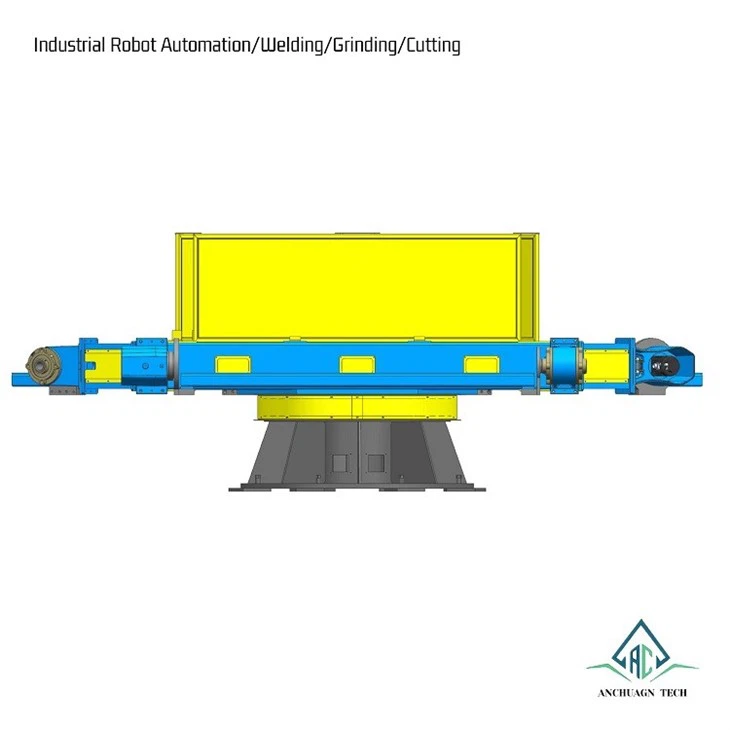
A four - axis positioner is a sophisticated piece of equipment that allows for precise movement and positioning of an object in four different axes. This includes rotation around the X, Y, and Z axes, as well as an additional axis that can provide a unique degree of freedom, such as a tilt or a flip. The Four - axis Rotating Three - station Flip Positioner is a prime example of such a device, offering multiple stations and the ability to flip the workpiece, which can be highly beneficial in various industrial applications.
Features of Four - Axis Positioners Relevant to Food Processing
Precision and Flexibility
One of the most significant advantages of four - axis positioners is their precision. In food processing, precision is crucial for tasks such as cutting, slicing, and portioning. A four - axis positioner can accurately position food items, ensuring consistent cuts and portions. For example, in a meat processing plant, a four - axis positioner can hold a large piece of meat in the correct position for slicing, allowing for uniform thickness and size of the slices.
The flexibility of four - axis positioners is also a major asset. They can be programmed to move in a variety of ways, adapting to different food shapes and processing requirements. This means that a single positioner can be used for multiple food products, reducing the need for specialized equipment for each type of food.
Hygiene and Safety
In the food processing industry, hygiene is of utmost importance. Four - axis positioners can be designed with materials that are easy to clean and sanitize. Stainless steel is a common choice, as it is resistant to corrosion and can withstand the harsh cleaning agents used in food processing facilities. Additionally, the design of the positioner can minimize areas where food particles can accumulate, reducing the risk of contamination.

Safety is another critical aspect. Four - axis positioners can be equipped with safety features such as emergency stop buttons, sensors to detect human presence, and protective enclosures. These features ensure that the equipment can be operated safely in a food processing environment.
Benefits of Using Four - Axis Positioners in Food Processing
Increased Productivity
By automating the positioning process, four - axis positioners can significantly increase productivity in food processing. They can perform tasks much faster than manual labor, and they can work continuously without getting tired. For example, in a bakery, a four - axis positioner can be used to position dough for cutting and shaping, allowing for a higher volume of products to be produced in a shorter time.
Improved Quality
The precision and consistency provided by four - axis positioners result in improved product quality. In the case of food products, this means more uniform shapes, sizes, and weights. For instance, in a confectionery factory, a four - axis positioner can ensure that each chocolate truffle is the same size and shape, enhancing the overall aesthetic appeal and customer satisfaction.
Cost Savings
Although the initial investment in a four - axis positioner may be significant, it can lead to long - term cost savings. By increasing productivity and reducing waste, the positioner can help food processing companies save on labor costs and raw materials. Additionally, the durability of four - axis positioners means that they have a long service life, reducing the need for frequent replacements.
Limitations and Challenges
Initial Investment
As mentioned earlier, the initial cost of a four - axis positioner can be high. This may be a barrier for small and medium - sized food processing companies. However, it is important to consider the long - term benefits and cost savings that the positioner can provide.
Maintenance and Training
Four - axis positioners require regular maintenance to ensure optimal performance. This includes cleaning, lubrication, and calibration. Additionally, operators need to be trained to use the positioner effectively. This can add to the overall cost and time required to implement the equipment in a food processing facility.
Compatibility with Food Products
Not all food products are suitable for processing with a four - axis positioner. Some delicate or irregularly shaped foods may be difficult to position accurately. For example, soft fruits or foods with a high moisture content may require special handling and may not be compatible with the standard positioning mechanisms of a four - axis positioner.
Conclusion
In conclusion, four - axis positioners have great potential in the food processing industry. Their precision, flexibility, and ability to improve productivity and quality make them a valuable asset for food processing companies. However, it is important to carefully consider the initial investment, maintenance requirements, and compatibility with food products before implementing a four - axis positioner.
If you are a food processing company looking to enhance your production efficiency and product quality, I encourage you to explore the possibilities of using a four - axis positioner. Our company offers a wide range of four - axis positioners, including the Four - axis Rotating Three - station Flip Positioner, which can be customized to meet your specific needs. Contact us to discuss your requirements and start a procurement negotiation.
References
- Smith, J. (2020). Automation in Food Processing. Journal of Food Science and Technology, 45(2), 123 - 135.
- Johnson, A. (2019). Precision Positioning in Industrial Applications. Industrial Engineering Review, 32(4), 210 - 225.