As a supplier of Laser Welding Robots, I am often asked about how these advanced machines manage the welding process in real-time. In the following blog post, I will delve into the intricacies of real-time management in laser welding robots, exploring the technologies, systems, and strategies involved.
Real-time Sensing Technologies
One of the cornerstones of real-time management in a laser welding robot is the use of advanced sensing technologies. These sensors are crucial for monitoring various parameters during the welding process, allowing the robot to make immediate adjustments as needed.
Vision Sensors
Vision sensors play a vital role in laser welding. They can capture high-resolution images of the welding area, enabling the robot to detect the position and orientation of the workpiece. By analyzing these images, the robot can precisely guide the laser beam to the correct location. For example, in the case of complex-shaped workpieces, vision sensors can identify the edges and contours, ensuring that the laser welding is carried out accurately along the intended path. This is particularly important in applications such as Robot Laser Filler Wire Welding Solution, where precise placement of the filler wire and the laser beam is essential for a strong and consistent weld.
Temperature Sensors
Temperature sensors are used to monitor the heat generated during the welding process. Excessive heat can lead to issues such as distortion, cracking, or changes in the material's properties. By continuously measuring the temperature at the welding point, the laser welding robot can adjust the laser power in real-time. If the temperature rises above the optimal range, the robot can reduce the laser power to prevent overheating. Conversely, if the temperature is too low, the power can be increased to ensure proper melting and fusion of the materials. This real-time temperature control is critical in maintaining the quality of the weld, especially in applications where the material's thermal sensitivity is a concern.
Weld Penetration Sensors
Weld penetration is a key factor in determining the strength and integrity of a welded joint. Weld penetration sensors can measure the depth of the weld in real-time. This information is used by the robot to adjust parameters such as the laser power, welding speed, and focal position. For instance, if the weld penetration is too shallow, the robot can increase the laser power or slow down the welding speed to achieve the desired penetration. In applications like laser welding industrial robot, where high-quality welds are required, accurate control of weld penetration is essential.
Control Systems
In addition to sensing technologies, laser welding robots rely on sophisticated control systems to manage the welding process in real-time. These control systems process the data received from the sensors and make decisions on how to adjust the robot's operation.
Closed-loop Control Systems
Most laser welding robots use closed-loop control systems. In a closed-loop system, the sensors continuously provide feedback on the welding process parameters, and the control system compares this feedback with the pre-set target values. If there is a deviation between the actual and target values, the control system sends commands to the robot's actuators to make the necessary adjustments. For example, if the vision sensor detects that the laser beam is off-target, the control system will send signals to the robot's motion control system to correct the position of the laser head. This continuous feedback and adjustment mechanism ensure that the welding process remains stable and accurate.
Adaptive Control Systems
Adaptive control systems take the concept of closed-loop control a step further. These systems are designed to adapt to changes in the welding environment or workpiece characteristics. For example, if the material properties of the workpiece vary slightly, an adaptive control system can automatically adjust the welding parameters to compensate for these changes. This is particularly useful in mass production scenarios where there may be minor variations between individual workpieces. Adaptive control systems can optimize the welding process in real-time, improving the overall quality and consistency of the welds.
Communication and Integration
Effective communication and integration are essential for real-time management in laser welding robots. These robots need to communicate with various components within the welding system, as well as with other manufacturing equipment in the production line.
Internal Communication
Inside the laser welding robot, different subsystems such as the motion control system, laser generator, and sensor modules need to communicate with each other. This is typically achieved through a high-speed internal network. For example, the vision sensor sends the image data to the control system, which then processes the data and sends commands to the motion control system to adjust the position of the laser head. This seamless internal communication ensures that all components of the robot work together in harmony, enabling real-time management of the welding process.
External Communication
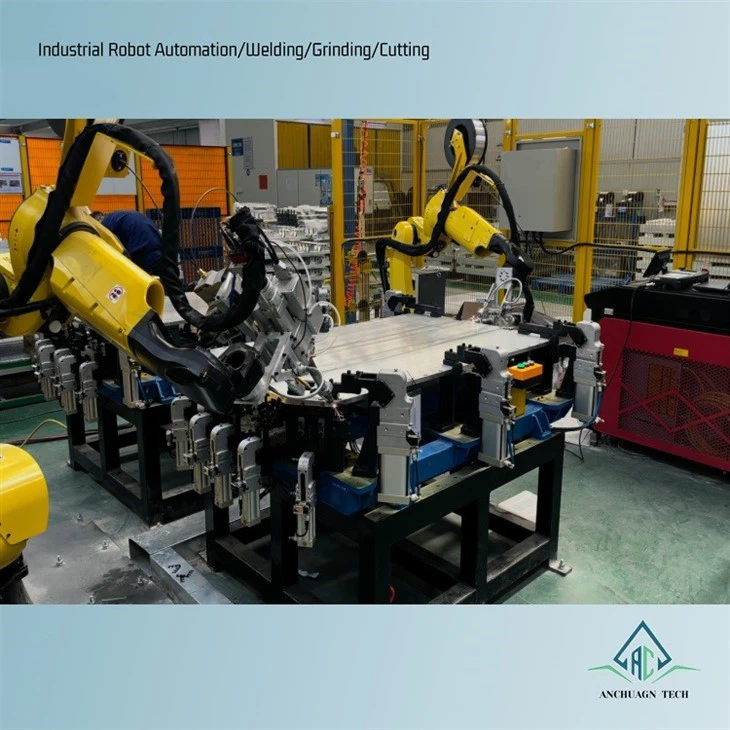
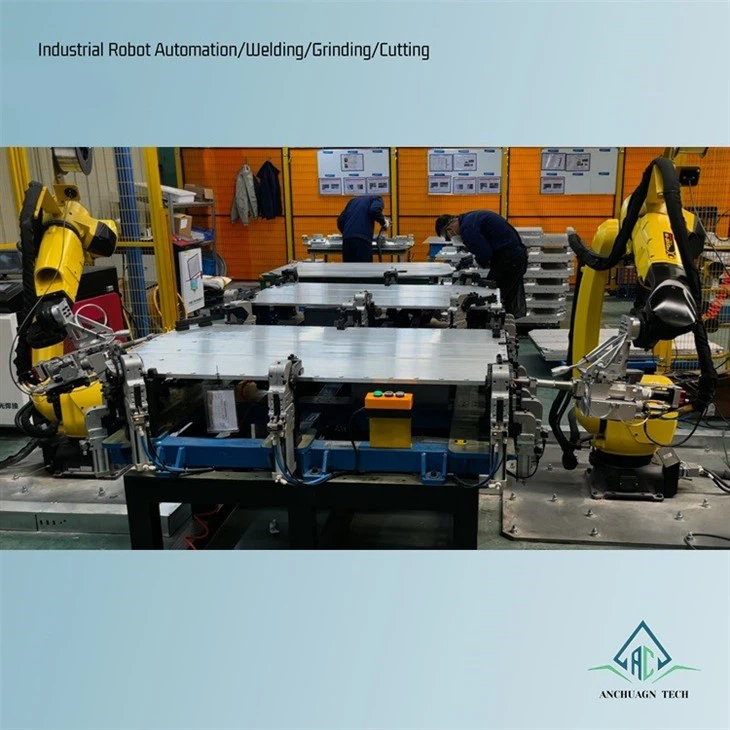
Laser welding robots also need to communicate with external devices and systems. They can be integrated into a larger manufacturing automation system, allowing for real-time data exchange with other equipment such as conveyors, material handling robots, and quality control stations. For instance, in a production line for Battery Tray Laser Welding Machine, the laser welding robot can receive information about the position and orientation of the battery tray from the conveyor system. It can also send data about the welding quality to the quality control station for further analysis. This external communication enables the entire production process to be coordinated and optimized in real-time.
Strategies for Real-time Management
In addition to the technologies and systems mentioned above, there are several strategies that can be employed to enhance the real-time management of the welding process in a laser welding robot.
Process Monitoring and Analytics
Continuous process monitoring and analytics are essential for identifying potential issues and optimizing the welding process. By collecting and analyzing data from the sensors, the control system can detect trends and patterns in the welding process. For example, if the temperature sensor shows a gradual increase in temperature over a series of welds, it may indicate a problem with the cooling system or an incorrect setting of the laser power. By analyzing this data in real-time, the robot can take preventive measures to avoid weld defects and ensure the quality of the final product.
Predictive Maintenance
Predictive maintenance is another important strategy for real-time management. By monitoring the performance of the robot's components, such as the laser generator, motors, and sensors, the system can predict when maintenance is required. This allows for proactive replacement of worn-out parts before they cause failures, minimizing downtime and improving the overall efficiency of the welding process. For example, if the vibration sensor detects an abnormal level of vibration in the robot's arm, it may indicate a problem with the bearings or gears. The system can then schedule maintenance to prevent further damage.
Conclusion
In conclusion, a laser welding robot manages the welding process in real-time through a combination of advanced sensing technologies, sophisticated control systems, effective communication and integration, and strategic management approaches. These features enable the robot to adapt to changing conditions, ensure the quality of the welds, and optimize the overall efficiency of the welding process.
If you are in the market for a high-quality laser welding robot, I encourage you to reach out to us for more information. Our team of experts can provide you with detailed technical specifications, customized solutions, and support throughout the procurement process. Contact us today to discuss your requirements and start a partnership that will take your welding operations to the next level.
References
- [1] Campanelli, S. L., Caruso, G., & Langella, C. (Eds.). (2016). Laser and Hybrid Laser Arc Welding Processes. Woodhead Publishing.
- [2] Emmelmann, C., & Reinhart, G. (Eds.). (2008). Laser Technology for Manufacturing. Springer.
- [3] Steen, W. M., & Mazumder, J. (2010). Laser Material Processing. Springer.