

As a dedicated supplier of robot welding torches, I've spent countless hours exploring every nook and cranny of these remarkable tools. One question that often surfaces in discussions with our customers is about the heat dissipation capacity of a robot welding torch. In this blog post, I'll delve into the fundamentals of heat dissipation, its importance in robot welding torches, and how we ensure our products excel in this crucial aspect.
Understanding Heat Dissipation in Welding
Before we jump into the specifics of robot welding torches, let's first understand what heat dissipation means in the context of welding. Welding is essentially a process of using heat to join two or more pieces of metal together. This intense heat generation is a natural by - product of the welding arc, which can reach temperatures of several thousand degrees Celsius. In a robot welding setup, maintaining a stable and controlled temperature is of utmost importance.
Heat dissipation can be defined as the process by which heat is transferred from a hotter object (in this case, the welding torch) to a cooler surrounding medium. This transfer occurs through three primary mechanisms: conduction, convection, and radiation.
Conduction is the transfer of heat through a solid material. In a welding torch, heat is conducted from the tip of the torch, where the welding arc is formed, to the rest of the torch body. The material properties of the torch, such as its thermal conductivity, play a significant role in this process. Metals like copper are often used in welding torch construction due to their high thermal conductivity, which allows for efficient heat transfer.
Convection involves the transfer of heat through the movement of fluids, either liquids or gases. In the case of a welding torch, cool air or a cooling fluid (such as water) can be used to carry away the heat. For example, some high - performance welding torches use a water - cooling system. The water circulates through the torch, absorbing the heat and carrying it away to a heat exchanger where it can be dissipated.
Radiation is the transfer of heat through electromagnetic waves. Although it plays a relatively smaller role in the heat dissipation of a welding torch compared to conduction and convection, it still contributes to the overall heat loss from the torch surface.
Importance of Heat Dissipation Capacity in Robot Welding Torches
The heat dissipation capacity of a robot welding torch is not just an abstract technical detail; it has real - world implications for the performance and longevity of the torch, as well as the quality of the welds produced.
First and foremost, efficient heat dissipation helps to prevent overheating of the welding torch. When a torch overheats, it can cause a variety of problems. The electrode and the contact tip can wear out more quickly, leading to frequent replacements and increased costs. Overheating can also cause the insulation materials in the torch to degrade, which poses a safety hazard. Moreover, an overheated torch may lead to inconsistent weld quality, as the excessive heat can affect the stability of the welding arc and the melting of the filler material.
Secondly, a high heat dissipation capacity allows the robot welding torch to operate at higher welding currents for longer periods. In industrial welding applications, time is money. The ability to work continuously at high currents means that more welding can be done in less time, increasing productivity. For example, in a large - scale manufacturing plant where hundreds of welds need to be made every day, a welding torch with excellent heat dissipation can significantly reduce the production cycle time.
How Our Robot Welding Torches Excel in Heat Dissipation
At our company, we take heat dissipation very seriously. We've invested heavily in research and development to design and manufacture robot welding torches that offer superior heat dissipation performance.

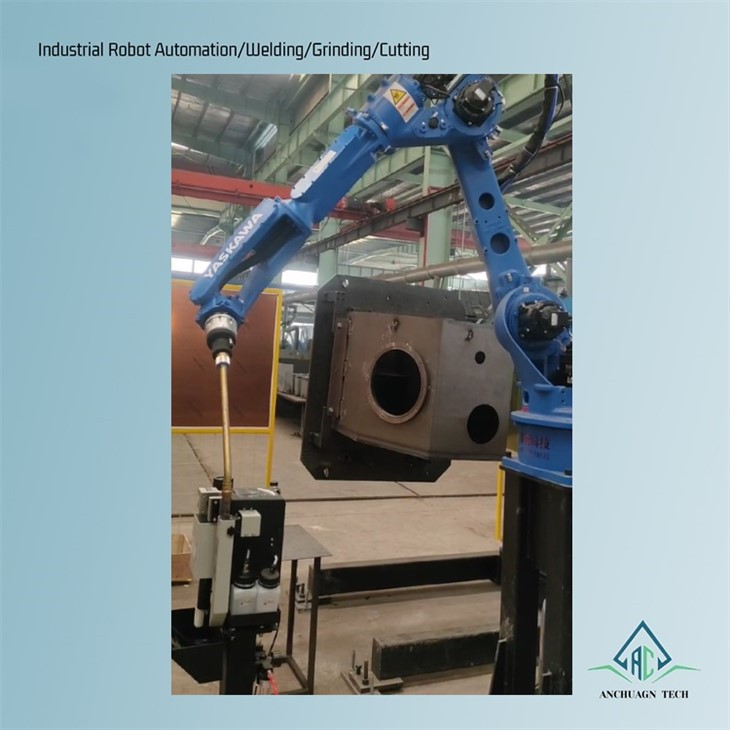
One of the key features of our torches is the use of high - quality copper alloys in the torch body and contact tip. These copper alloys have excellent thermal conductivity, allowing heat to be quickly transferred away from the welding arc. The design of the torch also maximizes the surface area available for heat dissipation. A larger surface area means more contact with the surrounding air or cooling fluid, facilitating more efficient convection.
In addition to the material selection, we also offer a range of cooling options for our welding torches. For light - duty applications, our air - cooled torches are a cost - effective and reliable choice. These torches use the natural flow of air to carry away the heat. They are simple in design, easy to maintain, and suitable for applications where the welding current is relatively low.
For heavy - duty applications that require high - current and continuous welding, our water - cooled torches are the ideal solution. Our water - cooling systems are designed to provide a constant flow of cool water through the torch, effectively removing the heat generated during welding. The water is circulated through a closed - loop system that includes a heat exchanger, where the heat is dissipated to the surrounding environment.
We also continuously improve the design of our torches based on customer feedback and the latest technological advancements. By using advanced simulation software, we can model the heat transfer process in our torches and optimize their design for maximum heat dissipation efficiency.
Complementary Products for Optimal Welding Performance
To further enhance the performance of our robot welding torches, we also offer a range of complementary products. For instance, the Welding Torch Cleaner is an essential tool for maintaining the cleanliness of the welding torch. A clean torch not only ensures better electrical conductivity but also helps in the heat dissipation process by allowing the cooling mechanism to work more effectively.
The Welding Platform is another important accessory. It provides a stable and well - positioned platform for the robot welding operation. A proper welding platform can help in better heat distribution during the welding process, reducing the heat stress on the torch.
The Pneumatic Spot Welding Machine is a powerful addition to our product line. It can be used in combination with our welding torches for specific spot - welding applications. This machine is designed to work in harmony with our torches, ensuring efficient heat management and high - quality welds.
Contact Us for Your Welding Needs
If you're in the market for a high - quality robot welding torch with excellent heat dissipation capacity, look no further. Our team of experts is ready to assist you in finding the perfect solution for your specific welding requirements. Whether you're a small - scale workshop or a large - scale industrial manufacturer, we have the products and the knowledge to meet your needs.
We understand that every welding application is unique, and we're committed to providing customized solutions. Contact us today to start a discussion about your welding project. We can provide you with detailed product information, technical support, and competitive pricing. Let us help you take your welding operations to the next level with our top - of - the - line robot welding torches.
References
- Welding Handbook, American Welding Society
- Principles of Heat Transfer, Frank P. Incropera and David P. DeWitt
